Structural drying is a distinct phase from water extraction: extraction removes the standing water you can see, while drying removes the moisture soaked into materials you cannot see. A Phoenix bathroom can look dry to…
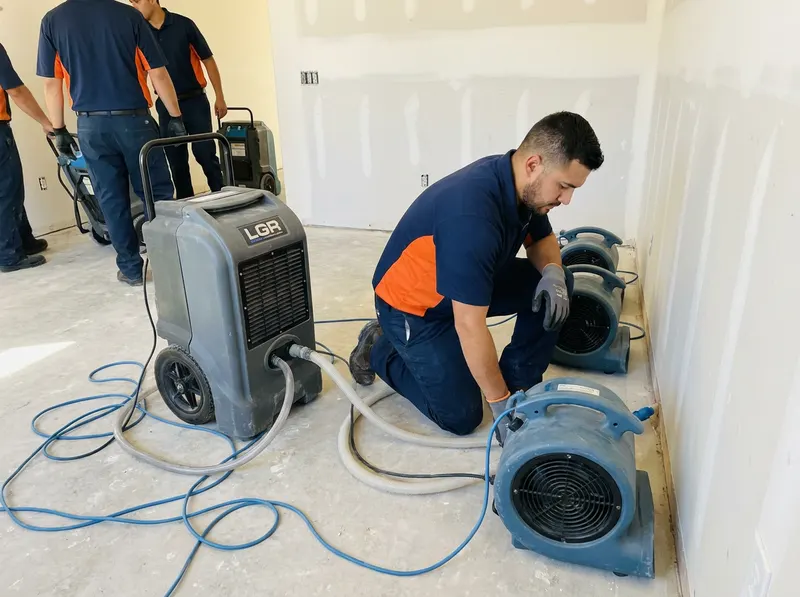
Structural drying is a distinct phase from water extraction: extraction removes the standing water you can see, while drying removes the moisture soaked into materials you cannot see. A Phoenix bathroom can look dry to the eye while the subfloor and bottom wall plates still read 30 to 40 percent moisture content on a meter, that hidden water is what feeds mold and warps hardwood weeks later. The drying phase is what actually returns framing, drywall, and slab to their pre-loss dry standard.
The sequence is straightforward. First, moisture meters and, where needed, a thermal camera map how far the water traveled and which materials are wet. Second, air movers are placed to force evaporation off wet surfaces at a rate of roughly one unit per 10 to 16 linear feet of affected wall. Third, LGR dehumidifiers pull that evaporated moisture out of the air, each removing on the order of 100 to 150 pints per day depending on the model. Fourth, moisture content is read and logged every day and equipment is repositioned until targets are met. Fifth, the equipment is removed once readings confirm the structure is dry, not on a fixed calendar.
Phoenix conditions shape the timeline. Summer outdoor humidity spikes during monsoon storms across Ahwatukee Foothills, Laveen, and South Mountain-adjacent neighborhoods, which is exactly why sealed dehumidification beats simply opening windows, pulling in humid outside air can slow the dry-out. Older homes in Willo Historic District and Encanto-Palmcroft often have hardwood over wood subfloor, which holds water longer and may need specialty mat drying. Newer slab-on-grade homes in Desert Ridge and Paradise Valley Village trap moisture in the concrete, which can extend drying past five days. Post-tension slabs common in North Central Phoenix and Arcadia require careful reading before any repair.
A quick note that prevents a common misunderstanding: dehumidification is not the same as running your household AC or a store-bought dehumidifier. Class 3 and Class 4 water losses require commercial LGR units and calibrated meters to reach dry standard; a residential unit cannot pull moisture out of saturated framing fast enough to beat mold growth, which can start within 24 to 48 hours. If a loss is a small Class 1 spill on tile in Sunnyslope or Maryvale, minimal air movement may be all that is needed; if water wicked up drywall and into a wood subfloor, the full air-mover-plus-LGR setup with daily monitoring is the correct scope. Daily moisture logs also give your insurer documented proof the drying was justified and completed.
Every job gets a firm, written price after a free on-site visit.
Tell us about your structural drying & dehumidification job in Phoenix and we'll send a clear, written quote, usually the same day.
 Water Damage Restoration Phoenix